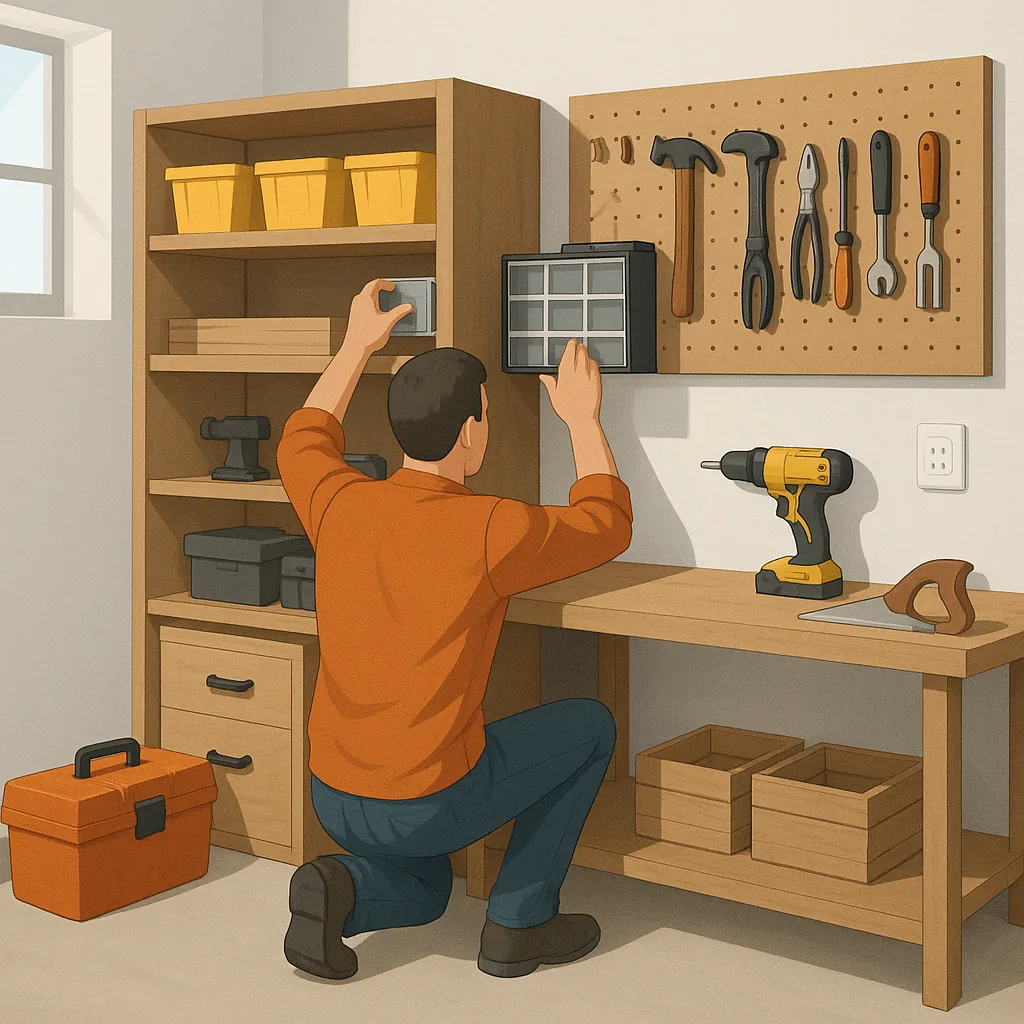
Practical tips for DIY workshop organisation
Good workshop organisation saves time, reduces waste and keeps projects moving smoothly, which is especially important for makers who juggle multiple builds and experimental tasks at once. Start by assessing the physical space you have, whether that is a garage, shed or a dedicated room, and note fixed features such as windows, doors and power outlets. Measure the floor area and wall heights so you can plan storage and workbench placement to make the most of vertical space. Consider how you move around the room while working and aim to create clear pathways for materials and finished pieces to avoid tripping or clutter build-up.
Define distinct zones for the main workshop activities to reduce friction during projects. Typical zones include a primary workbench for assembly, a power-tools corner, a materials and stock area, and a finishing area for sanding or finishing coats. Place heavy or noisy equipment near an exterior wall to simplify ventilation and noise control, and keep frequently used hand tools close to the primary workbench. Labelling each zone on a simple floor plan helps visualise workflow and makes it easier to tweak the layout as your needs change.
Lighting and power are often overlooked but essential parts of an organised workshop. Fit bright, glare-free ceiling lighting above main work areas and add task lighting such as adjustable LED lamps at the bench and sander stations. Ensure you have sufficient power outlets and consider dedicated circuits for heavy-draw appliances to prevent nuisance trips. Keep cables neat and off the floor using trunking or cable clips to protect them from damage and to maintain a safe working environment.
- Use shallow drawers or labelled bins for small consumables such as screws, nails and cable ties to make retrieval quick and predictable.
- Install open shelving for raw materials like timber and sheet goods so you can inspect stock at a glance and avoid moisture damage from being stored on the floor.
- Adopt vertical storage solutions such as pegboards or slatwall panels for frequently used hand tools to keep them visible and within reach.
Storage choices should reflect the projects you do most often and the pace at which you go through materials. For fast-moving consumables, place a small secondary stock closer to the bench so you can replenish without interrupting your flow. Reserve higher or less accessible shelves for seldom-used tools and specialty jigs. Use clear containers or labels that state contents and quantity to avoid the wasteful habit of buying duplicates because the right item cannot be found. Regularly audit your stock every few months and dispose of or donate items that have not been used for a season.
Think about tool placement in terms of ergonomics and sequence of operations to reduce repetitive movements and discomfort. Keep heavy items at waist height to avoid lifting injuries, and arrange common hand tools in the order you tend to use them so your hands follow a logical path during tasks. Use mobile bases for larger tools so you can reconfigure the workshop for larger projects, and consider quick-change jigs or modular fixtures that reduce set-up time between similar jobs. Efficient layout decisions save minutes on every task, which add up to hours over the lifespan of the workshop.
Maintenance routines solidify organisation habits and prevent the gradual slide back into chaos. Set a weekly five- to ten-minute tidy-up to return tools to their homes, sweep the main surfaces and check consumable levels. Once a month perform a deeper check of tool condition, blade sharpness and any safety equipment like dust extraction filters. Create simple visual cues such as shadow boards or labelled outlines on drawers to make it immediately obvious where each tool belongs, which helps others who share the space and keeps your workshop ready for the next project. For more ideas from the Maker & DIY category, take a look at the blog tag page on this topic by visiting the Maker & DIY collection.
Finally, accept that organisation is iterative and will evolve as your projects change and skills develop. Tackle one area at a time, measure the impact of a change and be prepared to adapt your layout and storage solutions. Keep a notebook or simple digital note of what worked and what did not so you can refine your approach without losing useful solutions. A well organised workshop becomes an enabler of creativity rather than an obstacle to getting projects finished. For more builds and experiments, visit my main RC projects page.
Comments
Post a Comment