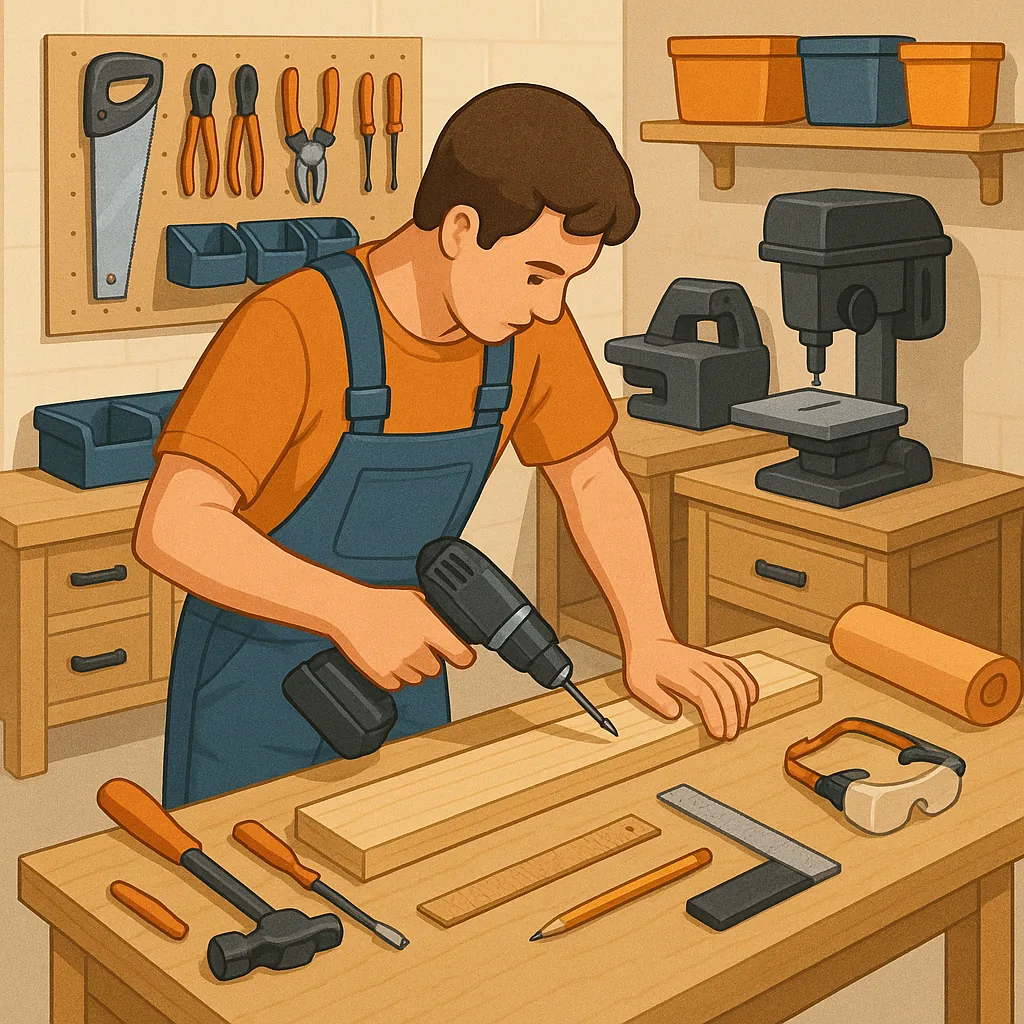
DIY workshop organisation: a concise checklist for makers
Organising a workshop changes how you work more than any new tool can, because it removes friction from every project and keeps hazards under control. This article offers a practical checklist approach that suits garages, garden sheds and dedicated studio spaces alike, and it focuses on small, maintainable habits rather than one-off spending. Read through the sections and adopt the items that match your space, skillset and budget to create a reliable routine that improves productivity and reduces waste.
Start with a clear audit before you buy storage or move benches, because an honest appraisal reveals what you already own and what you actually use. List your most common tasks and the tools they require, note awkward items that never seem to have a place, and photograph shelves and drawers to remember before-and-after changes. Measure your room and mark fixed features such as doors, windows and fuseboxes so the layout can be planned around safe access and natural light. Decide on zones such as cutting, assembly, finishing and storage so tasks follow a logical flow rather than being scattered around the space.
- Clear a dedicated workbench area and keep it free for active projects.
- Designate tool zones: hand tools, power tools, measuring and finishing tools.
- Create a small-parts system with labelled bins or drawers for fasteners and fittings.
- Install a tidy vertical storage area for clamps, saws and longer items.
- Set up lighting and power with safe routes for extension leads and RCD protection.
- Keep a visible safety station with goggles, gloves and first-aid supplies.
- Prepare waste and recycling points for wood, metal and hazardous materials.
- Introduce a simple labelling system and tool shadowing for rapid return of tools.
Think about layout as a workflow: place frequently used hand tools within arm's reach of your main bench, and situate noisy or dusty power tools near ventilation and electrical outlets. Keep heavy items at waist height to reduce lifting strain and store seldom-used equipment up high or on mobile trolleys. Consider sightlines so you can see in-progress projects at a glance and avoid obstacles between bench and storage that break your movement. Good lighting is essential, so supplement overhead fixtures with adjustable task lamps and ensure sockets are on circuits with appropriate protection for power tools.
Storage choices should prioritise visibility and accessibility to reduce time spent hunting for parts and materials. Use clear plastic boxes or front-opening drawers for fasteners and label every container consistently using a durable format such as laminated tags or printed labels. Modular shelving and stackable bins adapt as your collection changes, while pegboards and magnetic strips keep hand tools visible and off benches. For larger stock, group materials by type and size and place them near the zone where they will be used, and keep volatile or hazardous supplies in a lockable cabinet to comply with safety and insurance considerations.
Maintaining organisation is largely a habit, not a one-off project, so build routines into the end of each session: clear the bench, return tools to their designated spots, empty the vacuum and log any consumables that need topping up. Schedule a weekly sweep to tidy floors and reassess projects in progress, plus a monthly inventory check of fittings and adhesives to avoid surprise shortages. Train collaborators or family members in the same system so rules are consistent, and mark out a short projects shelf for items that need a pause rather than reclaiming prime bench space for new tasks. For more builds and experiments, visit my main RC projects page.
Use this checklist as a starting point and apply changes incrementally so improvements stick, remembering that the best workshops evolve around the way you work rather than following someone else’s ideal layout. If you want more ideas and real-world examples, see the Maker & DIY label for related posts that focus on small, practical upgrades and storage hacks. With a clear plan, a few smart storage buys and a commitment to tidy habits, your workshop will become safer, faster and more enjoyable to use.
Comments
Post a Comment