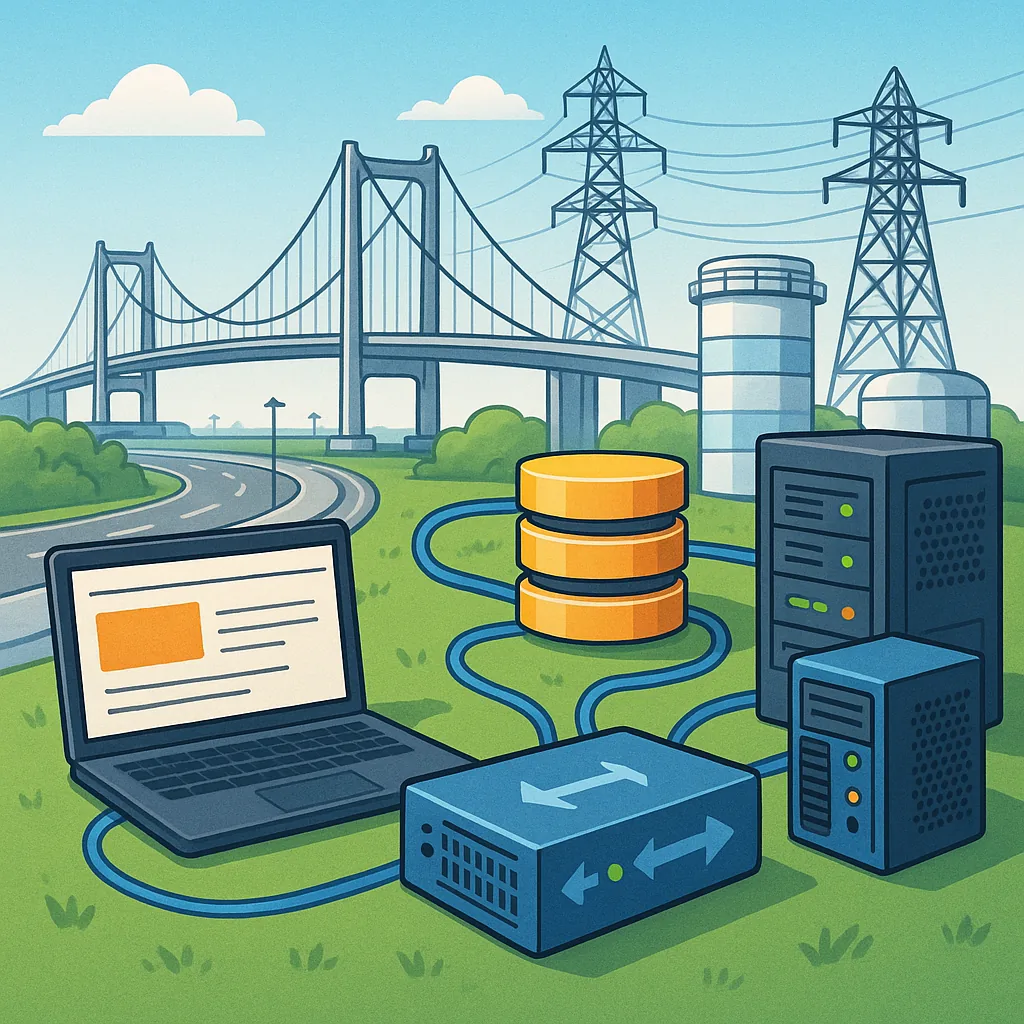
what a proxy is (educational, non-abuse): a practical checklist for infrastructure.
A proxy is an intermediary service that forwards requests between clients and servers, acting as a controlled point of access and processing for network traffic. In infrastructure terms a proxy can be software or hardware that receives incoming connections, applies rules or transformations, and then relays requests to the appropriate backend resource. Proxies are used to centralise access control, optimise performance with caching, perform protocol translation, and provide a layer where security policies can be enforced. This article provides a checklist-style guide to help infrastructure engineers assess, select, deploy and operate proxies in a safe and compliant way.
There are several common proxy types to recognise when planning deployment, and each has different implications for architecture and management. Forward proxies sit between clients and the internet and are often used for outbound filtering, caching and privacy within an organisation. Reverse proxies accept inbound requests on behalf of servers and are used for load balancing, TLS termination and web application firewalling. Transparent proxies intercept traffic without explicit client configuration and are suitable for network-level controls. Application-level proxies such as HTTP or SOCKS proxies operate at different protocol layers and offer varying degrees of visibility and control.
Before implementing a proxy, clarify the primary use case and constraints so the chosen solution aligns with organisational requirements. Typical motivations include reducing latency through caching, consolidating logging for auditing, centralising authentication and authorisation, protecting backend services via TLS termination and performing request routing for microservices. Consider performance, compatibility with existing applications, privacy obligations and the operational overhead of managing another component in the path. Keep the purpose of the proxy explicit to avoid scope creep and to ensure it is used only for legitimate, policy-compliant functions.
- Confirm functional goals: caching, filtering, load balancing, TLS termination or protocol translation.
- Assess performance needs: expected concurrent connections, throughput and latency targets.
- Verify compatibility: application protocols, headers, authentication mechanisms and session persistence.
- Define security requirements: encryption, access controls, authentication, logging and intrusion detection.
- Check compliance and privacy: data retention policies, legal constraints and audit needs.
- Plan resilience: redundancy, failover procedures and health checks for backend services.
- Estimate operational cost: licensing, maintenance, monitoring and staff training needs.
When selecting a product or open source solution, map the checklist items to technical features and run short proof-of-concept tests. Evaluate TLS handling and certificate lifecycle management, as improper configuration can expose sensitive data. Confirm that the proxy supports fine-grained access control so that administrative interfaces and logs are protected. Ensure logging and observability integrate with your existing monitoring stack, and that the proxy exposes relevant metrics such as request latency, error rates and active connections. Performance testing under realistic load should be part of selection to identify bottlenecks early.
Deployment and configuration require careful attention to operational details to keep the infrastructure reliable. Use automated configuration management and infrastructure-as-code to provision proxy instances consistently, and store secrets such as certificates and keys in a secure vault. Configure rate limits, timeouts and connection pooling to protect backend services and avoid cascading failures. Establish a maintenance window and update plan for security patches, and validate changes in a staging environment before affecting production traffic. Document configuration drift policies and keep backups of critical configuration and certificates.
Operate proxies with clear procedures for monitoring, incident response and compliance reporting. Centralise logs and set retention policies that meet legal and organisational requirements, while anonymising or minimising personal data where appropriate. Monitor both performance metrics and security alerts so anomalies can be investigated promptly. Regularly review access lists, authentication methods and TLS cipher suites to maintain a secure posture. For more on practical infrastructure topics refer to the Infrastructure label on this blog, which collects related posts and guides. For more builds and experiments, visit my main RC projects page.
Comments
Post a Comment