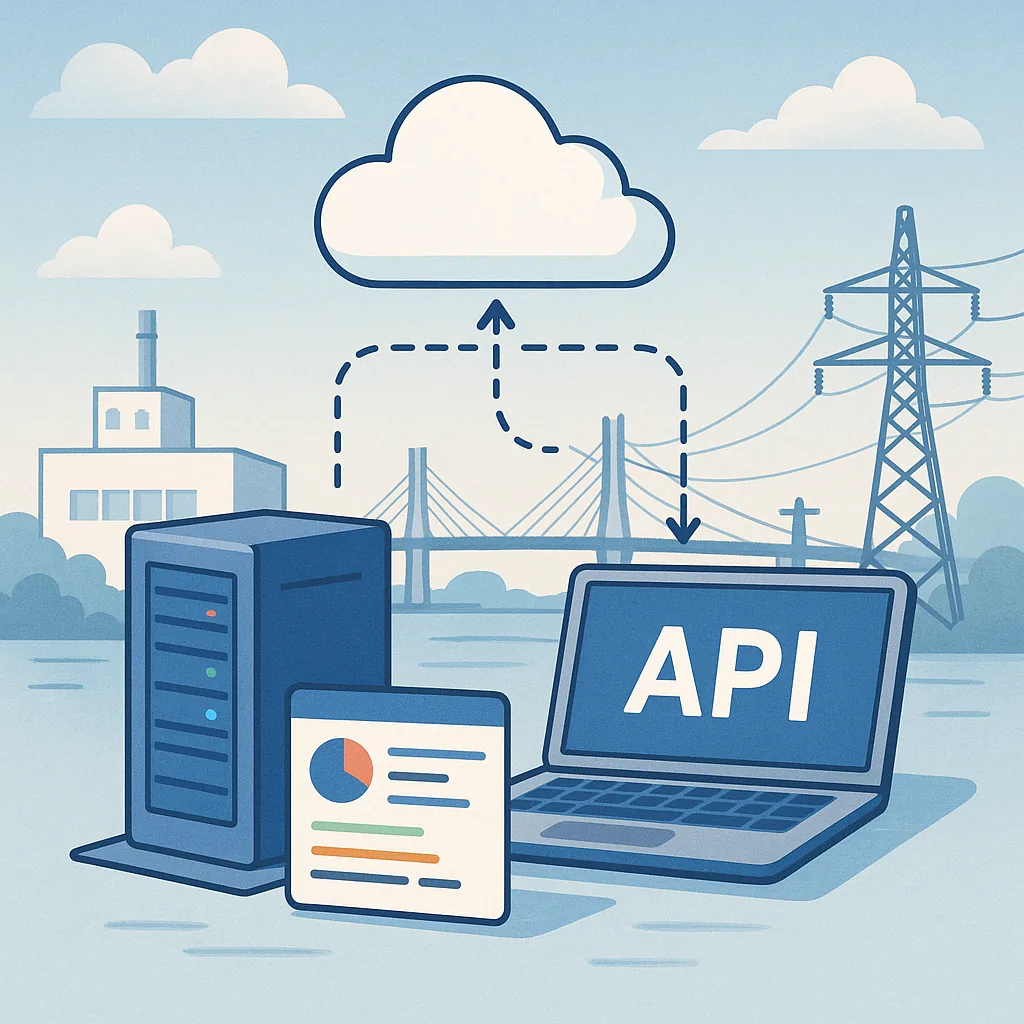
API basics for beginners: a practical introduction to how applications talk to each other
APIs, or application programming interfaces, are the glue that connects different pieces of software and infrastructure. For beginners, an API is simply a defined way for one programme to ask another for data or to request that an action is performed. In modern infrastructure work you will encounter APIs when integrating services, automating tasks, or exposing functionality from a server to other systems. Understanding the basic concepts will make it easier to read documentation, troubleshoot issues and design simple integrations safely and effectively.
At a high level, an API defines the requests you can make and the responses you will receive. Web APIs are the most common type for infrastructure and they usually run over HTTP or HTTPS. Each API exposes endpoints, which are URL paths that represent resources or actions. When you make a request to an endpoint you include a method, headers and sometimes a body, and the server returns a status code and payload. Knowing how these pieces fit together helps you interpret logs and craft correct requests when using tools or code.
- GET — retrieve information about a resource.
- POST — submit new data or create a resource.
- PUT — replace a resource or update it fully.
- PATCH — make a partial update to a resource.
- DELETE — remove a resource.
Requests and responses are often formatted as JSON, a lightweight data interchange format that is both human readable and easy for machines to parse. A typical GET request returns a JSON object or array and a status code such as 200 for success or 404 if the resource is not found. POST and other methods commonly include a request body carrying JSON data. Familiarise yourself with common status codes so you can quickly determine whether a request failed due to client error, server error or permission issues. This knowledge is particularly useful when you examine logs or debug automation scripts that interact with APIs.
Authentication and authorisation are central to any API used in infrastructure. Many APIs use API keys, bearer tokens or OAuth mechanisms to identify the caller and grant appropriate access. As a beginner you should treat credentials like any other secret: store them securely in environment variables, secret managers or restricted configuration files rather than hard coding them into scripts. Also be aware of scopes and permissions so you request only the access you need, and implement least privilege to reduce risk in production environments.
When you start experimenting, basic tools will make learning quicker. curl is a command line utility that lets you make HTTP requests and see raw responses, which is helpful for understanding headers and status codes. Graphical tools such as Postman or Insomnia let you build requests visually, store examples and replay them as you iterate. Many API providers also supply interactive documentation or a sandbox environment where you can test calls safely. Practising with these tools will help you move from reading concepts to making working requests and interpreting the results.
As you design or consume APIs for infrastructure tasks, follow a few practical best practices to reduce friction and improve reliability. Use consistent and descriptive naming for endpoints and parameters, validate input to prevent accidental errors, implement retries with exponential backoff for transient failures, and include clear logging on both client and server sides. Rate limiting is common on public APIs, so design your automation to respect limits and handle 429 responses gracefully. Finally, document the behaviour you rely on so colleagues can reproduce and maintain integrations without guesswork.
If you want to explore further within the same category on this blog you can find related posts on the Infrastructure label where practical examples and deeper explanations are collected. Start small, experiment in a safe environment and treat security and observability as integral parts of any integration you build. With a few simple concepts understood, APIs will become a powerful tool in your infrastructure toolkit. For more builds and experiments, visit my main RC projects page.
Comments
Post a Comment