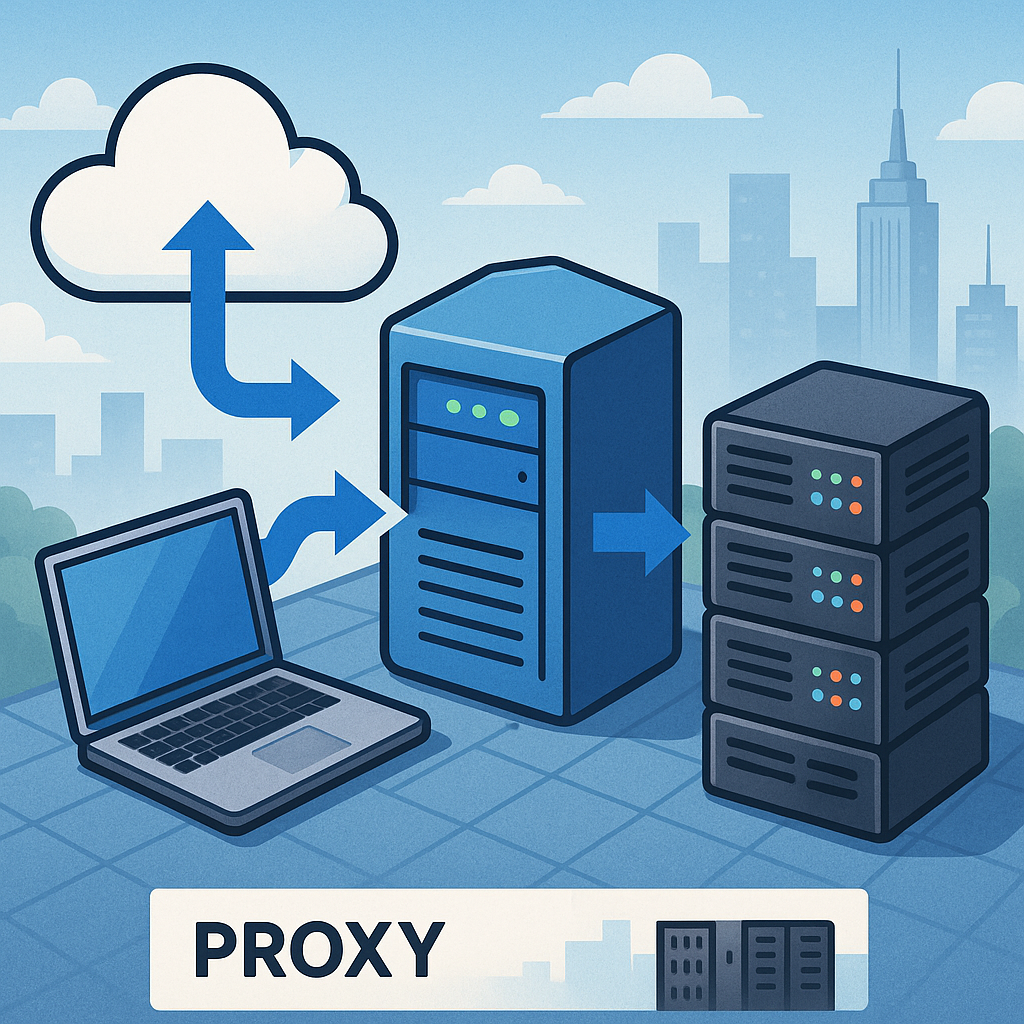
what a reverse proxy is (educational): a practical checklist guide.
A reverse proxy is an intermediary server that receives client requests and forwards them to one or more backend servers, acting as the public face of an application or service, and this article presents a checklist-style guide to understanding, choosing and operating one in an infrastructure context.
Start by clarifying the problems you want a reverse proxy to solve, and tick these boxes early: identify whether you need load balancing for many backend instances, whether TLS termination should occur at the proxy, whether caching will reduce backend load, whether URL path routing or virtual hosting is required, whether you must consolidate authentication and authorisation, whether you need detailed access and application logging, and whether you need integration with service discovery or orchestration platforms.
Understand the core behaviours and responsibilities a reverse proxy might perform in your environment before deployment, and consider the following capabilities as essential checks.
- TLS termination and certificate management to centralise encryption handling and reduce complexity on backend servers.
- Load balancing strategies such as round-robin, least connections, or health-aware weighting to distribute request traffic effectively.
- Request routing based on hostname, path, headers or cookies to map public endpoints to appropriate backend services.
- Caching of static responses and conditional caching to improve response times and reduce repeated work by origin servers.
- Compression and connection optimisation to reduce bandwidth and improve throughput for clients with limited networks.
- Access control and authentication delegation, allowing centralised enforcement of identity and session policies.
- Observability features including request logging, metrics export and tracing headers to support monitoring and troubleshooting.
Use a deployment checklist when you go to implement a reverse proxy, and make sure to cover environment, resilience and operational practices by confirming that you have automation-ready configuration files, tested certificate issuance and renewal processes, health-check probes for backends, a plan for rolling updates with traffic draining, rate-limiting or circuit-breaking policies where needed, and sufficient capacity planning including failover scenarios and geographic considerations for latency-sensitive workloads.
For configuration and security, validate these items in your checklist before going live: harden the proxy host by minimising the attack surface and applying timely patches, enforce strong TLS cipher suites and HTTP security headers, restrict backend network access so that only the proxy can reach internal services, securely manage secrets and certificates using a vault or automation rather than embedding them in files, enable logging and retention policies that meet compliance needs, and test authentication delegation flows including session expiry and token revocation behaviour.
Operational readiness and ongoing maintenance are the final checklist items to confirm, and this should include synthetic and real traffic tests that exercise routing, failover and TLS behaviour, monitoring dashboards and alerting for latency, error rates and backend health, regular review of access logs for unusual patterns, capacity reviews after traffic changes, and a documented rollback procedure for configuration changes; for additional background and related posts see the blog's collection of Infrastructure posts for practical examples and deeper dives into complementary infrastructure topics. For more builds and experiments, visit my main RC projects page.
Comments
Post a Comment