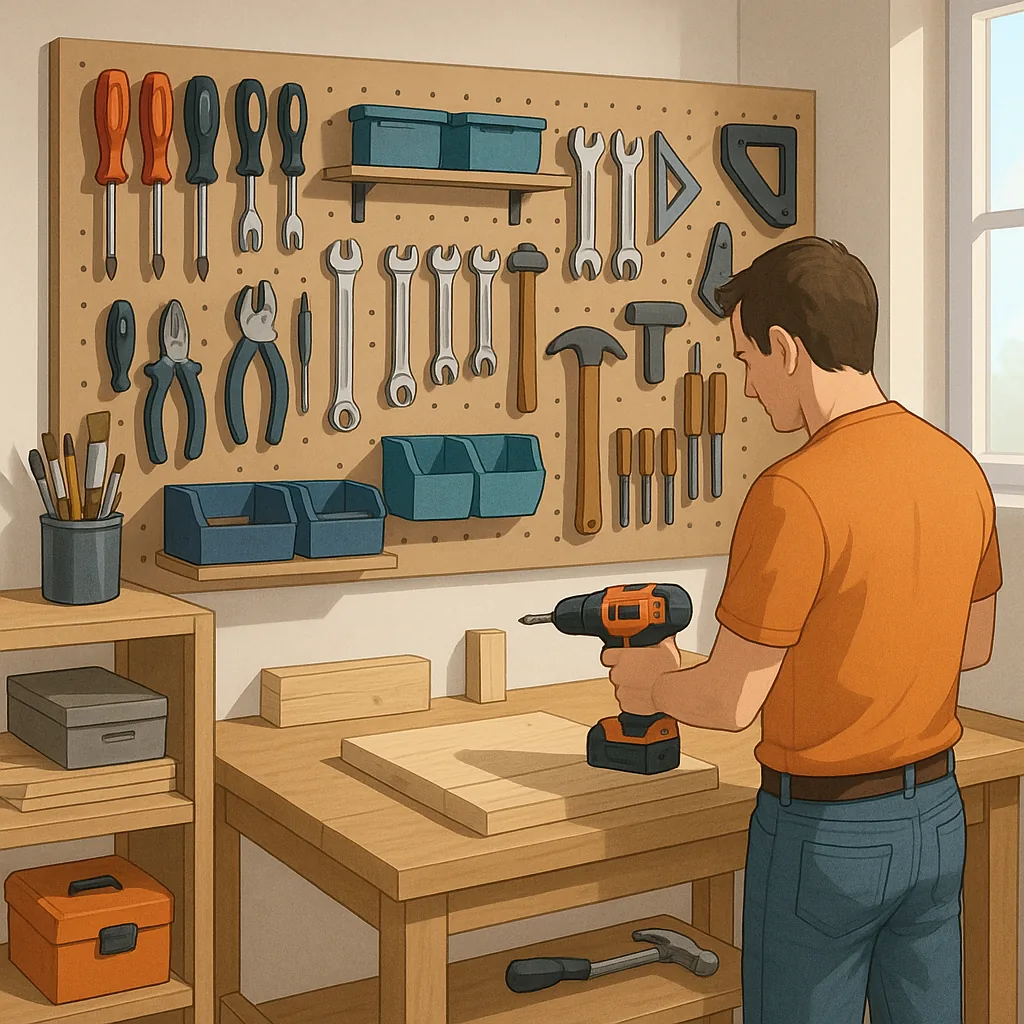
DIY workshop organisation: practical tips and tricks for a tidy workspace
Good workshop organisation makes projects quicker, safer and more enjoyable, and it starts with a clear plan for how you want to work. Begin by thinking about the types of projects you do most often, the tools you rely on, and the amount of space you can realistically dedicate to a workbench, storage and movement. A small change such as relocating a frequently used tool by a couple of metres can save minutes on each session that add up to hours over a year. Establishing a deliberate layout before adding cupboards and racks will prevent wasteful rearranging later.
Divide the space into functional zones so that cutting, assembly, finishing and storage each have a home. Keep noisy or dusty operations like sawing and sanding toward the back or near ventilation and dust extraction, and place finishing and delicate work where light is best. Workbench height is important for comfort, so measure for your preferred standing or seated posture and consider adjustable benches if you share the space. Leave clear circulation paths to reduce trips and accidental contact with tools.
Storage is where organisation really repays effort, and a mix of wall, bench and mobile storage tends to be most flexible. Use vertical space with pegboards, rails and magnetic strips to keep tools visible and easy to grab, while closed cupboards protect consumables from dust. Label shelves and containers consistently so you spend less time hunting; labelling can be as simple as printed tape or clear adhesive labels. For inspiration and related articles, see the Maker & DIY tag on this site.
Tool-specific organisation keeps hand tools, power tools and accessories ready for the job. Shadow boards on the wall make missing tools obvious and promote returning items to their place, while shallow drawers with foam inserts protect delicate instruments and spanners. For power tools, consider a charging station that holds batteries and chargers in one location to avoid hunting cables and depleted packs. Mobile tool trolleys are useful for projects that move around the workshop, and a dedicated space for clamps prevents them becoming a floor hazard.
Small parts and consumables are often the greatest source of frustration, so adopt systems that make storage obvious and replenishment easy. Group fasteners, fittings and offcuts by type and size, and use clear, stackable drawers or jars so contents are immediately visible. Keep consumables such as sandpaper, glue and tape together on a single shelf and establish minimum stock levels to avoid running out mid-project. A simple set of labels and a parts bin for ongoing project components will reduce scatter and lost parts.
- Small clear drawers for screws and nails to make selection quick and accurate.
- Magnetic strips for drill bits and metal tools to keep benches uncluttered.
- Tool shadow boards to encourage return-to-place behaviour and spot missing items.
- Stackable bins for offcuts organised by material and thickness.
- Wall-mounted racks for clamps to keep them visible and accessible.
Optimise workflow by arranging frequently used tools and consumables within arm’s reach of the primary bench, and store seasonal or rarely used items higher up or in less accessible areas. Set up a clear area for incoming and outgoing projects so materials are not scattered across the bench permanently. Keep a trash and recycling station close to work zones to reduce the time spent clearing debris, and allocate a bench for measuring and marking that remains uncluttered so measurements are consistent and mistakes are reduced.
Finally, maintain organisation with short, regular tidy-up routines and a simple inventory habit that keeps you aware of stock and tool condition. A five-minute tidy at the end of each session prevents clutter building up and makes the next session more productive. Inspect PPE, blades and dust-collection filters on a schedule and replace consumables before they cause delays. A well organised workshop is not about perfection but about creating repeatable habits that preserve order and reduce friction, making it easier to start and complete projects efficiently and safely. For more builds and experiments, visit my main RC projects page.
Comments
Post a Comment