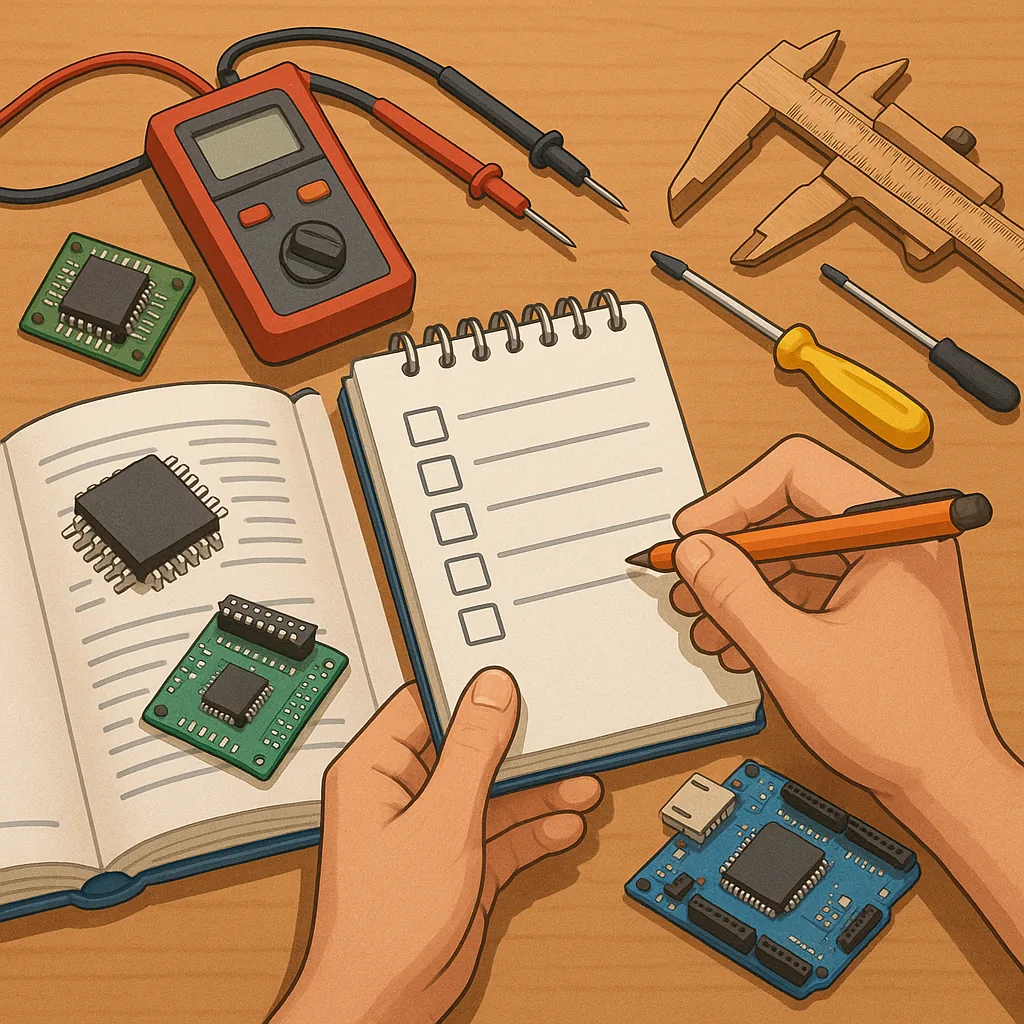
how to choose the right microcontroller: a practical checklist for makers and engineers
Choosing a microcontroller is one of the first decisions that will shape a project from prototype to production, so a checklist helps avoid costly rework later on because you picked the wrong part for the wrong reason.
Start with clear project constraints and requirements by listing the I/O you'll need, the physical form factor, supply voltage and battery limits, target operating temperature, and any environmental considerations such as vibration or moisture exposure.
Match processing and memory to the task by evaluating CPU core family and clock speed for the algorithms you plan to run, plus available RAM and non-volatile flash for code and data storage, and whether you need an external memory interface for large datasets.
Check peripheral support early by confirming required interfaces such as ADC resolution and sampling rate, timers, PWM channels, and serial buses like UART, SPI and I2C, and consider DMA and hardware crypto if you anticipate intensive data movement or security features.
Assess the development ecosystem by looking for mature toolchains, available compilers and debuggers, boards for rapid prototyping, community examples and vendor libraries, and whether the microcontroller is supported by popular real-time operating systems or middleware you intend to use.
- Define functional must-haves such as minimum ADC bits, number of GPIOs and communication ports to avoid surprises later.
- Estimate real power consumption in typical and sleep modes rather than relying solely on datasheet peak numbers.
- Confirm supply chain and long-term availability, including package variants and alternate part numbers for production resilience.
- Validate package and PCB footprint constraints to ensure the chosen MCU fits the mechanical design and assembly capabilities.
- Plan for debugging and programming access with dedicated pins or supported interfaces to make firmware development practical.
Consider manufacturing and certification factors such as unit cost at your expected volumes, procurement lead times, minimum order quantities, and whether you need parts with automotive or medical qualifications; these constraints commonly dictate whether a low-cost hobby MCU is appropriate or a certified device is required.
Before committing, shortlist two to three candidate microcontrollers, prototype with development boards and reference designs, and run a small set of verification tests for performance, power and peripheral behaviour; these practical checks reveal issues that datasheet reading alone will not catch, and you can find additional project-level checklists on our How-To Guide page. For more builds and experiments, visit my main RC projects page.
Comments
Post a Comment